
Live Casino

How Live Casino Streaming Works Safely Behind the Scenes

A professional live casino broadcast is designed to appear relaxed and entertaining. Behind the presenter, however, the operation follows security procedures closer to those of a regulated casino and financial technology platform than an ordinary entertainment stream.

Every accepted wager involves money, timing, game integrity, and personal account data. The operator must demonstrate which bets were received, when the wagering period ended, what physical outcome occurred, and how each balance was settled.

A video feed without reliable transaction records would not be sufficient. Understanding how live casino streaming works safely behind the scenes means looking beyond cameras and studio décor.

Important controls include restricted access, dealer training, surveillance, secure servers, result verification, audit logs, and formal procedures for interrupted or invalid rounds.

The UK Gambling Commission requires licensed live dealer operations under its authority to be fair and independently auditable.

GLI standards similarly describe continuous recording, secure equipment, equivalent player feeds, and systems that prevent early access to outcomes.

Studios Use Controlled Access

Live casino equipment is placed in a restricted environment rather than an ordinary public filming location. Access may be separated between presenters, floor supervisors, surveillance teams, technicians, and authorized management.

This reduces opportunities for interference with cards, wheels, shoes, servers, or communications equipment. Entry rules can also help investigators determine who was present when an incident occurred.

GLI-19 states that live game equipment, gaming servers, control servers, and communication systems should be installed in secure locations protected against unauthorized access, environmental hazards, and power failure.

Dealers Follow Documented Procedures

Game presenters do more than appear on camera. They must handle equipment according to defined rules and communicate each stage clearly.

Procedures cover opening bets, closing the wagering period, dealing cards, announcing results, and responding to mistakes. Supervisors may be required to approve corrections or voids.

The UK Gambling Commission’s guidance for live studios refers to trained croupiers, commercial-quality equipment, supervision, surveillance, and game logs. These measures make the operation independently reviewable rather than dependent on the dealer’s word alone.

Wagers Must Close Before the Outcome Is Known

One of the most important controls is preventing late betting. The platform must finalize wagers before anyone can access the result.

In roulette, bets close before the ball settles into a pocket. In card games, the system prevents new wagers after protected information becomes available.

GLI standards specifically require live systems to prevent access to the gaming outcome before the wager has been finalized. They also require the result to be recorded before it is posted to the platform.

This separation protects both the player and the operator from result-based transaction manipulation.

Surveillance Records the Entire Round

The video presented to players is not necessarily the only recording. A studio can maintain separate surveillance coverage designed for security and dispute review.

GLI-19 calls for continuous, unobstructed recordings that identify the sequence, date, and time of each game. The footage should be detailed enough to confirm whether procedures were followed and should be protected against interference or deletion.

If a player disputes a roulette result or dealer action, investigators can compare the surveillance video, game log, and account transaction.

Systems Keep Detailed Game Logs

Each round produces more than a visual result. The system can record the table, time, accepted wagers, result, settlement, manual interventions, and any error condition.

These logs help detect irregular patterns involving equipment, staff, particular locations, or unusual result frequencies. They also support accounting and customer-service investigations.

GLI standards require live gaming activity and results to be recorded through simulcast control servers. UK requirements additionally state that operations must be independently auditable.

Independent Testing Supports Compliance

A provider’s own quality checks are important, but regulated markets may also require external testing or auditing.

The UK Gambling Commission’s testing strategy explains that live dealer requirements apply to relevant licensed studios. An audit conducted for another jurisdiction may be accepted when it sufficiently covers the required provisions; otherwise, an additional audit may be necessary.

Independent review can examine studio controls, game procedures, technical records, and whether the operation meets applicable standards.

Security Extends Beyond the Studio

The platform also needs information-security controls for accounts, communications, transaction data, and critical systems. A secure physical table cannot protect users if the account platform is poorly managed.

The UK Gambling Commission bases its remote-gambling security requirements on relevant controls from ISO/IEC 27001:2022. These requirements apply to critical systems intended to prevent customers from being exposed to unnecessary security risks.

Operators may use access controls, monitoring, system backups, incident response procedures, and protected communications as part of this wider framework.

What Happens During a Disconnection?

A frozen video does not automatically cancel a valid wager. The settlement depends on whether the bet was accepted and whether the player could still influence the result.

UK guidance states that when an operator has received the wager and the customer can no longer influence the outcome, the result should normally stand. If an interruption occurs before an outcome is generated in a single-stage game, the deducted stake should generally be returned.

Operators should publish their disconnection rules. Players should also avoid repeatedly refreshing or submitting the same bet while uncertain whether the first instruction was accepted.

Responsible Design Still Matters

A secure and fairly audited stream does not remove gambling risk. Continuous tables can make it easy to move from one round to the next without noticing elapsed time.

UK technical standards require elapsed-time information for relevant casino sessions and allow operators to offer duration reminders.

Players should use these tools alongside deposit limits and session budgets. Technical fairness means the game operates according to its rules; it does not mean the player has a long-term advantage.

Safe live casino streaming depends on several layers of control. Restricted studios protect physical equipment, trained dealers follow defined procedures, servers close wagering before results are available, and surveillance systems preserve evidence of every round.

Transaction logs connect accepted bets with verified outcomes and account settlements. Independent audits and information-security requirements provide additional oversight, while interruption policies determine how valid or incomplete wagers are handled.

Before playing, verify that the operator is licensed, read its game and disconnection rules, and check that your wager appears as accepted. Use session reminders and financial limits, because a secure broadcast still involves real gambling risk.

Live Casino

The Advantages and Limitations of Live Dealer Games for Players

Players choosing an online table game often face two broad formats. Fully digital games generate and display results through software, while live dealer products stream a real presenter conducting the game with physical cards, wheels, or other equipment.

Live play may appeal to users who value visual realism, social interaction, and a pace similar to a physical casino. Digital games may suit those who prefer faster rounds, lower device demands, or the ability to pause between decisions.

Neither option is automatically safer, fairer, or more profitable. The operator’s licence, table rules, payout structure, connection quality, and individual gambling habits matter more than presentation alone.

Understanding the advantages and limitations of live dealer games allows players to compare the formats realistically. The aim is not to find a guaranteed winning table, because none exists.

It is to choose an experience whose pace, rules, technical requirements, and financial boundaries are clear before money is placed at risk.

Live Dealers Provide a Stronger Sense of Presence

A real presenter gives the game a recognizable human rhythm. Players watch the dealer shuffle cards, announce results, and prepare each new round.

Purpose-built studios can use detailed sets, themed uniforms, professional lighting, and several camera angles. Providers also create localized environments with dealers who speak different languages or understand particular markets.

Digital tables may offer polished graphics, but they do not reproduce the same human presentation. Whether that difference improves the experience depends on personal preference.

Live Interaction Can Make Games More Engaging

Chat features allow players to send messages to the presenter and sometimes communicate with other participants. This introduces a limited social element without requiring a visit to a casino venue.

ONE Blackjack combines host communication with multiplayer access, live support, statistics, and betting history.

Social engagement can also make time pass less noticeably. Players should avoid letting conversation or entertainment value override a planned stopping point.

Physical Procedures May Increase Perceived Transparency

Some players prefer seeing real cards and wheels because they can observe the physical result. Multiple camera views may show card values, dealer actions, and roulette outcomes in detail.

However, the appearance of transparency is not enough. A trustworthy live service requires controlled equipment, trained staff, secure areas, supervision, audit trails, and recorded gameplay.

UK standards for licensed studios require fair and independently auditable operations, dealer training, surveillance, and logs. Players should still verify that the casino itself is authorized in their jurisdiction.

Live Games Offer Familiar and Inventive Formats

The category includes conventional blackjack, roulette, baccarat, sic bo, and poker-style games. It also includes game shows that mix physical studio elements with multipliers, animations, or bonus mechanics.

This variety can serve both traditional table-game players and users who prefer entertainment-focused formats. Pragmatic Play’s portfolio combines standard live tables with speed games, multiplayer features, game shows, side bets, and digital statistics.

Additional features can make the rules more complicated. A branded roulette game with multipliers may have a different payout model from standard single-zero roulette, so the paytable must be read carefully.

Live Play Usually Requires More Waiting

Fully digital casino games can produce a result soon after the player presses a button. A live dealer table must follow betting, dealing, decision, settlement, and preparation stages.

Even speed-focused products retain a visible cycle. Speed Roulette averages about 25 seconds per round, while speed blackjack uses simultaneous and automated decisions to reduce waiting.

The slower pace may help users think before betting again. It may also feel inconvenient when dealers change, equipment is checked, or another blackjack participant takes time to decide.

Seats and Betting Limits Can Restrict Access

Some live blackjack tables contain a fixed number of seats. When every position is occupied, users may need to wait, bet behind another hand, or select a different table.

Providers have created scalable alternatives. ONE Blackjack uses a single shared position while allowing many players to make individual decisions. In contrast, certain VIP tables intentionally limit access to a small number of users.

Table minimums and maximums also vary. Dedicated environments may use flexible limits based on the operator, player group, or market. A minimum wager that appears small can still become expensive across repeated rounds.

Streaming Creates Technical Limitations

A live game needs more bandwidth than a simple text or low-animation interface. Video, audio, wagers, account updates, and results must remain synchronized.

Poor connectivity may cause buffering or delayed interaction. GLI guidance recommends equivalent audiovisual feeds, disclosed minimum connection requirements, and procedures for disconnections and interrupted data streams.

Players using mobile data should also consider consumption and signal stability. A long high-definition session may use more data and battery power than a standard digital table.

The Atmosphere Can Encourage Longer Sessions

Live games are designed as entertainment. Dealers, studio décor, chat, statistics, and continuous tables may make it easy to move from one round to the next without reviewing total spending.

Reality checks can display the amount of time elapsed and provide links to account history or exit options. UK standards require licensed remote operators to offer accessible reality-check facilities for relevant games.

Players should also set a monetary limit. WHO identifies financial distress, relationship difficulties, and diversion of household spending among the possible harms associated with gambling.

How to Decide Whether Live Games Suit You

Choose live play when you value interaction, physical presentation, and a slower structured pace. It may also suit players who understand traditional table rules and want to see the procedure unfold.

A digital game may be more practical when the connection is unstable, time is limited, or the available live tables have unsuitable minimum stakes. Neither format should be selected because it appears likely to produce more wins.

Before playing, confirm the licence, game rules, betting range, side-bet payouts, disconnection policy, and session tools. In Great Britain, the Gambling Commission recommends checking the business through its public licensing register.

Live dealer games offer human presentation, social interaction, visible physical procedures, and access to both traditional tables and modern game-show formats. These qualities can create a more immersive online casino experience.

The limitations include slower gameplay, seat restrictions, minimum wagers, short betting windows, device demands, streaming interruptions, and the possibility of losing track of time.

Live presentation does not eliminate the casino advantage or guarantee that an operator is legitimate. Compare the table with digital alternatives, verify the licence, and test your connection before committing money.

Set a firm session length and loss limit, and leave immediately when either boundary is reached.

Slots

Fixed Paylines vs. Adjustable Paylines: Which Should You Choose?

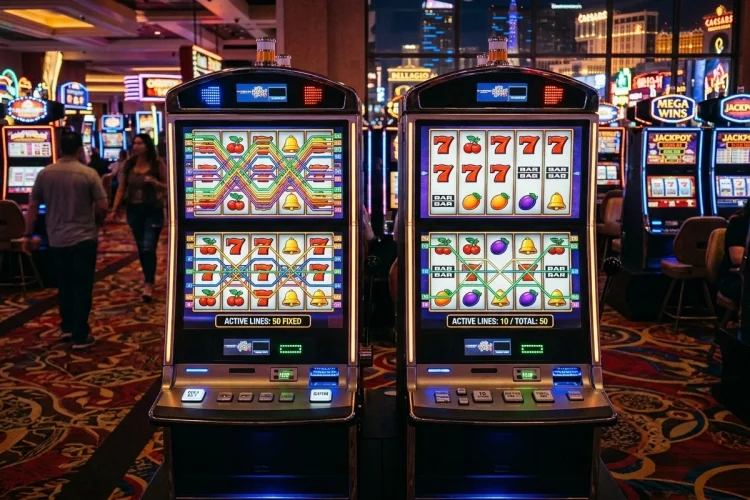
Slot selection is not only about choosing a theme or finding the largest advertised jackpot. The structure behind the reels determines how bets are placed, which symbol patterns qualify, and how much money is risked each time the spin button is pressed.

One important distinction is fixed paylines vs. adjustable paylines. Fixed lines are automatically included in every wager. Adjustable lines allow users to decide how many predefined routes remain active.

Neither design is universally better. Fixed paylines may be more suitable for players who prefer straightforward controls and complete line coverage. Adjustable options may appeal to those who want more flexibility over the total spin cost.

The choice should never be based on the belief that one format can predict wins or defeat the slot’s mathematical advantage. Payline settings do not control the random number generator. They determine which routes are covered after the reels produce an outcome.

A careful player should compare the minimum stake, paytable, bonus conditions, and complete cost before deciding which structure is more appropriate.

Choose Fixed Paylines for Simplicity

Fixed-payline slots automatically evaluate every listed route. Players do not need to remember whether a particular diagonal or zigzag path was activated.

This makes the betting interface easier to understand, especially on mobile devices where line-selection controls can be small. The displayed total bet normally represents complete coverage.

A fixed format may also reduce disappointment caused by seeing a high-paying combination on an inactive line. If the pattern follows any valid listed path, that route is already included.

The disadvantage is reduced flexibility. Players cannot lower the spin cost by removing individual paylines and may need to accept the developer’s minimum total wager.

Choose Adjustable Lines for Flexible Staking

Adjustable-payline games allow more control over how the total wager is distributed. Players may cover only a small selection of paths or activate the entire grid.

This can make it possible to play at a lower total cost while keeping the same amount per selected line. However, fewer active paths alss for ordinary line combinations to qualify.

A player should always confirm which routes remain active. GLI standards state that each line being played should be clearly indicated and that multi-line games should provide a summary display of available paylines.

Adjustability is useful only when the controls and consequences are understood.

Avoid the “More Lines Means Better Odds” Myth

More active paylines increase winning coverage, but they do not make the reels more likely to produce a particular symbol. The game’s random result is generated independently of previous spins.

Activating twice as many lines may approximately double the amount wagered when the line stake stays constant. The player is purchasinher than receiving a free improvement in odds.

Fewer lines create the opposite effect. They reduce cost and eligibility together.

Random-number standards require outcomes to be acceptably random, and they prohibit game behavior that adapts to previous results.

A slot does not reward someone merely because they activated every payline after several losses.

Read the Winning Direction

Paylines may run from left to right, right to left, or both way first matching symbol to appear on the leftmost reel and continue without a gap.

Other titles use adjacent-pay mechanics. IGT describes one product in which special symbols reward players when they land on at least three adjacent reels beginning from the left.

This illustrates why line count alone is insufficient. Two 20-line games can use different starting positions, symbol requirements, or payout calculations.

Check whether wilds substitute on every reel and whether scatters pay independently from the active paylines.

Check Bonus Access Before Reducing Lines

A bonus may be triggered by scatters appearing anywhere, meaning line selection has no direct effect. In other games, a particular feature or jackpot may require a qualifying bet level.

When adjustable paylines are available, reducing the count could potentially change prize eligibility. The rules should state whether the bonus remains active and whether its award is based on the line wager or total stake.

Fixed paylines dode access to every advertised jackpot. Some games still require an optional feature bet, particular denomination, or minimum total stake.

Regulatory standards in Ontario require game rules and paytable awards to be available before the player commits to a wager. Use that information rather than relying only on promotional graphics.

Compare RTP and Volatility Separately

RTP is the theoretical percentage returned as prizes over extensive play. Volatility describes how unevenly those prizes may be distributed.

A game can oremaining highly volatile. Another may have only a few lines but produce smaller awards more regularly.

The UK Gambling Commission explains that RTP is a long-term average and that normal volatility can make results vary considerably during an ordinary session.

The number of paylines cannot reveal the complete prize distribution. Review any published RTP or volatility information alongside the paytable.

Consider the Minimum Total Bet

A 50-line fixed slot with a $0.10 minimum wager may cost less than a 20-line adjustable game played at $0.02 per line with every route selected. In that example, the adjustable game costs $0.40.

This demonstrates why judging a slot by line count is misleading. The complete spin cost is what matters for budgeting.

Calculate how many initial spins fit within the session allowance. A $15 budget covers 150 spins at $0.10, 75 spins at $0.20, or 30 spins at $0.50 before accounting for any returned prizes.

The calculation does not predict session length, but it shows how quickly the original funds are placed at risk.

Make the Choice Before Starting

Decide whether simplicity or custom line selection is more important before placing a paid wager. Do not change the configuration impulsively after a losing sequence.

A fixed-payline slot may be preferable when the minimum bet is affordable and the player wants every route active. An adjustable game may be more appropriate when its line-selection controls are clear and lower coverage fits the planned budget.

The safest option is always the one whose total cost, prize rules, and feature conditions are completely understood.

Fixed paylines provide automatic coverage and a simpler betting interface. Adjustable paylines give players more control over the number of active routes and, in many games, the total spin cost.

That flexibility comes with the risk of missing combinations that appear on inactive paths. Neither structure changes the independence of slot outcomes or guarantees a higher return.

Compare the minimum total wager, winning direction, RTP, volatility, bonus eligibility, and maximum-prize conditions before playing.

Open the information screen, calculate the cost of full and reduced coverage, and select only a stake that fits a predetermined entertainment budget. When the rules are unclear, choose another game rather than wagering based on assumptions.

Slots

How Slot Paytables Work Before You Spin

The largest jackpot displayed above a slot game can attract immediate attention. It does not, however, explain the chance of winning, the required wager, or the conditions that activate the prize.

This is why players should understand how slot paytables work before they spin. The paytable provides the factual information behind the game’s visual presentation.

It identifies eligible winning combinations, symbol values, bonus conditions, payout calculations, and special restrictions. Reading these rules is especially important when comparing modern slots.

Games may use the same theme while offering different reel structures, RTP percentages, paylines, bonus mechanics, and maximum awards. A title may also contain complicated features in which multipliers build across cascades or special symbols collect values during free spins.

A paytable cannot make a negative-expectation game profitable or reveal when a bonus will appear. It can, however, help players understand the cost of a spin, avoid false expectations, and select a game whose mechanics fit their entertainment budget.

Confirm the Cost of One Complete Spin

The stake displayed beside the spin button may represent the total wager, the value per line, or the value of each coin. The exact design depends on the game.

Before playing, adjust the controls and observe how the total bet changes. A slot with 20 paylines and a $0.05 line wager may cost $1.00 for one complete spin.

Paytable information should explain the maximum credits per line and the configuration of eligible winning lines. These details are included among the technical information expected for reel games under GLI standards.

Check How Combinations Must Form

Symbols that appear close together do not always produce a win. Traditional paylines require the icons to land on a specific active path.

Many slots also require combinations to begin on the leftmost reel and continue without a gap. Others pay from both directions or allow scatter symbols to award prizes anywhere.

The paytable should state the required direction, number of matching symbols, and eligible reel positions. Malta’s Player Protection Directive requires game rules to explain the ways a player can win or lose and the prize available for each winning case.

Compare the Regular Symbol Payouts

A large maximum win can distract from the smaller prizes that occur during ordinary play. Review the full symbol ladder rather than focusing only on the top icon.

Look at what three, four, and five matching symbols pay relative to the total wager. Also check whether the highest symbol pays from two matches and whether lower symbols require more.

A classic slot can have a much simpler structure than a feature-heavy video game. Pragmatic Play’s Triple Tigers, for example, is described as a three-reel, three-row game with one payline and an advertised RTP of 96.52%.

Examine the Bonus Trigger Carefully

Bonus rounds are frequently advertised as a slot’s main attraction, but their activation rules may be more restrictive than the graphics suggest.

Check how many scatter or bonus symbols are needed and whether they must appear on particular reels. Then review the number of free spins, multiplier rules, retriggers, and any maximum feature value.

Some games use special bet options that change feature behavior or the probability of triggering a bonus. Pragmatic Play’s CULT, for example, lists two special bet options connected to bonus-game activation and multiplier behavior.

Understand RTP Without Misreading It

RTP represents the proportion of total stakes a game is designed to return over extensive play. A 96% theoretical RTP implies a long-term house advantage of approximately 4% before considering any external charges.

It does not mean that every $100 session returns $96. A player could lose the full amount, finish ahead, or experience many smaller wins that are later wagered again.

The UK Gambling Commission states that RTP is measured across a large number of games and that actual results vary during typical sessions because of volatility.

Recognize the Role of Volatility

Volatility describes the general distribution of a game’s prizes. A lower-volatility slot tends to concentrate more of its return in smaller and more frequent awards, while a higher-volatility design may produce longer losing periods and occasional larger wins.

Not every paytable displays a formal volatility rating. Players can sometimes obtain clues from the gap between small symbol prizes and the maximum award, although that does not provide a precise mathematical measurement.

The Gambling Commission advises that volatility must be considered when assessing actual RTP because short-term performance can vary significantly from the designed return.

Look for Maximum-Win and Jackpot Conditions

A maximum-win figure may be expressed as a multiple of the total bet. For example, a 5,000x maximum would equal $500 when the qualifying total wager is $0.10.

The game rules may cap a round after the maximum is reached, even when additional features remain. Progressive jackpots may also require a specific stake or separate qualifying event.

Do not raise a wager simply because a higher stake appears to offer access to a jackpot. The additional cost may exceed the entertainment budget long before a rare prize appears.

Use the Paytable as a Spending Tool

Reading the paytable can support better financial control because it reveals the true cost and structure of the game. Once the total wager is clear, players can calculate how many spins fit within a fixed limit.

A $20 budget permits 100 spins at $0.20 each but only 20 spins at $1.00 each. Actual play may last longer or shorter because wins can be re-wagered, but the calculation shows how quickly the original money is exposed.

Avoid increasing the stake to recover a loss or force a bonus to appear. Random slots do not become more likely to pay after an unsuccessful sequence.

A slot paytable provides the information needed to understand the price, rules, and potential rewards of every spin. It explains winning directions, symbol values, bonus triggers, multipliers, maximum prizes, and any wagering conditions connected to special features.

Use the paytable to compare the total stake with ordinary payouts rather than focusing only on an advertised jackpot. Check the RTP but remember that it is a long-term theoretical average, not a session guarantee.

Most importantly, calculate the cost per spin before playing and choose a stake that fits a predetermined entertainment limit. When the rules are difficult to find or understand, do not wager until the operator provides clear information.

Responsible Gambling

How to Set a Realistic Gambling Budget Without Chasing Losses

A gambling budget can protect finances only when it remains unchanged during a session. The greatest challenge often appears after an unexpected loss.

A player may feel that spending slightly more will create an opportunity to recover the money and return to the original plan. This behavior is known as chasing losses. It can transform a small entertainment allowance into a much larger financial problem.

GambleAware warns that attempts to win back lost money often lead to additional losses and recommends stopping when the preched. Learning how to set a realistic gambling budget therefore requires both calculation and behavioral protection.

The amount must be affordable, but the rules around it must also prevent emotional increases. A budget that is repeatedly expanded is not a genuine limit.

The safest plan assumes that losing is possible, separates gambling from essential finances, and identifies the circumstances in which gambling should stop completely.

Start With the Possibility of Losing Everything

Before deciding on an amount, imagine that the entire budget disappears without providing any return. Ask whether that result would affect your bills, savings, relationships, or emotional well-being.

If losing the amount would create panic or an urgent need to win it back, the figure is too high. Reduce it or do not gamble.

Gambling should never be used to solve financial problems. GamCare states that it should not be viewed as a way to make money and advises people affected by financial harm to track spending andnses.

Exclude Borrowed and Essential Money

A realistic budget must never include credit, loans, overdrafts, rent money, emergency savings, or funds shared with another person.

Credit can make gambling losses feel less immediate because repayment occurs later. However, interest and fees can increase the final cost long after the session has ended.

Essential money should be moved or allocated before gambling funds become available. Automated bill payments and savings transfers can reduce the amount visible in an everyday spending account.

WHO notes that gambling-related financial harm can include poverty and the diversion of household resources from esices.

Decide the Limit During a Calm Period

Do not calculate a budget while gambling, watching a sporting event, drinking alcohol, or reacting to a loss. Emotional conditions can make a higher amount seem temporarily reasonable.

Choose the limit at the beginning of a pay period or during a scheduled monthly financial review. Write down how it was calculated.

Include a rule that the budget may be lowered immediately but cannot be raised until the next review period. This prevents a temporary urge from becoming an official change.

A trusted person can also know the figure. GambleAware suggests telling someone about a spending limit so that the person can provide sary.

Measure Turnover and Net Loss Correctly

Gambling accounts display several figures that can be misunderstood. Total wagers, account balance, deposits, withdrawals, and net losses describe different things.

If someone deposits $50, wins temporarily, continues betting, and withdraws $20, the net cost is $30. The temporary high balance does not change the amount ultimately spent.

High betting turnover can also matter even when the final net loss appears small. Repeatedly recycling winnings through new wagers increases exposure to the game’s built-in mathematical advantage.

Use account histories to review the complete pattern. Licensed gambling websites in Great Britain must provide historic activity showing when, how much, and d on.

Build an Anti-Chasing Rule

Your budget should contain a specific instruction for what happens after the limit is reached. “Try to stop” is too vague.

A stronger rule might state: “When the $20 session allowance is lost, I log out, remove the app for the day, and do not make another deposit.”

Never increase stake size because several wagers have lost. Previous outcomes do not guarantee that the next result will be favorable.

Also avoid withdrawing money from another operator to continue playing elsewhere. Moving between accounts is still chasing when the purpose is to recover a loss.

Use Automatic Limits and Financial Blocks

Self-control can weaken during an emotional session, so the system should not depend entirely on willpower.

Use operator deposit limits, session reminders, and activity statements. Where available, activate a gambling-payment block with your bank.

The UK Gambling Commission states that many banks provide transaction blocks and that blocking software can restrict gambling ions.

Removing saved cards, disabling rapid payments, and keeping gambling money in a separate low-balance account can add further protection.

Adjust the Budget When Circumstances Change

A budget that was affordable three months ago may no longer be suitable. Income can fall, housing costs can rise, and family responsibilities can change.

Lower the allowance whenever debt increases, savings decline, or an unexpected bill appears. Gambling should be one of the first discretionary expenses reduced.

Do not increase the budget simply because income rises. First consider whether the additional money should strengthen emergency savings, reduce debt, or support another personal goal.

A zero budget is a valid financial decision. There is no obligation to maintain a gambling allowance every month.

Recognize When Budgeting Has Failed

Repeatedly changing the rules, hiding deposits, borrowing money, or feeling compelled to recover losses suggests that the issue is no longer simply budget design.

The American Psychiatric Association lists chasing losses, repeated unsuccessful attempts to cut down, lying about gambling, and relying on others to resolve gambling-related financial problems among possible order.

When these behaviors occur, stop gambling and seek support. Self-exclusion can provide a formal barrier for people who recognize that gambling is harmful a stop.

A realistic gambling budget must remain affordable even when every wager loses. Exclude borrowed money and essential funds, calculate the limit during a calm period, and prevent increases until the next scheduled review.

Track net spending across all accounts and create a specific anti-chasing rule for the moment your session allowance is exhausted. Strengthen the plan with deposit limits, bank blocks, and reduced payment access.

Review the amount whenever income or expenses change, and accept that zero may be the most appropriate limit. Examine your recent transactions now.

When budgeting repeatedly fails or gambling creates secrecy, debt, or distress, stop and contact a qualified support service.

Responsible Gambling

How to Gamble Responsibly and Stay in Control of Your Habits

Responsible gambling is not measured only by the size of a bet. A person may spend relatively little but still experience constant preoccupation, secrecy, stress, interrupted sleep, or conflict with family members.

Another person may gamble infrequently but take financial risks that affect essential expenses. Learning how to gamble responsibly and stay in control requires honest attention to both behavior and consequences.

The most important questions are whether gambling remains optional, whether losses are affordable, and whether it can be stopped without distress or repeated rule-breaking.

Problem gambling can affect anyone who participates. The National Council on Problem Gambling describes it as behavior that damages the individual or family and disrupts daily life or work.

The World Health Organization also identifies financial distress, relationship breakdown, mental-health effects, and wider family harms among the possible consequences.

Recognizing changes early creates more opportunities to act before those consequences become severe.

Write Personal Rules in Advance

Create clear rules before money is deposited. Decide which activities are allowed, how frequently you may gamble, the maximum session length, and the maximum affordable cost.

Avoid vague goals such as “I will be careful.” A specific rule – such as one planned session with a fixed entertainment amount – is easier to monitor.

Include a stop condition for both losses and wins. Continuing because you are ahead can return winnings to the game, while continuing because you are behind can begin a loss-chasing cycle.

Understand Your Emotional Triggers

Gambling may become more difficult to control when it is used to manage boredom, loneliness, anxiety, anger, or financial pressure. The activity can provide temporary distraction without resolving the underlying problem.

Keep a short note of what happened before each unplanned session. Patterns may emerge around arguments, payday, alcohol use, sporting events, sleeplessness, or stressful workdays.

When a trigger appears, delay the decision and choose another activity. Exercise, conversation, cooking, entertainment without betting, or leaving the device in another room can interrupt an automatic response.

Track Time and Money Honestly

Memory is unreliable when sessions contain many small bets, deposits, wins, and withdrawals. Use operator histories and bank statements to calculate the net result.

Record the total amount deposited and withdrawn rather than remembering only the largest win. Also note the number and duration of sessions.

The Gambling Commission recommends tools that help users monitor time and money, including account histories, limits, and reality checks. Accurate records can reveal changes before they become obvious in everyday life.

Watch for Early Warning Signs

Warning signs include spending beyond planned limits, increasing stake sizes, gambling for longer periods, hiding transactions, and repeatedly thinking about the next opportunity to play.

Other concerns include borrowing money, neglecting work, becoming defensive when questioned, or feeling restless while trying to reduce gambling. Chasing previous losses is especially dangerous because it encourages further risk to solve a problem created by earlier risk.

The NHS states that gambling problems can affect finances, relationships, and physical and mental health. The appearance of several warning signs is a reason to pause and seek an outside perspective.

Protect Essential and Shared Finances

Keep gambling money separate from the funds needed for rent, food, education, transport, health care, debt payments, and savings. Never use credit, loans, an overdraft, or another person’s money to continue a session.

Where appropriate, ask a trusted person to help review statements or manage access to shared funds. This should be a protective agreement rather than a secret arrangement imposed without communication.

Bank gambling blocks can add a practical barrier. Blocking software and the removal of stored payment details can further reduce the speed of impulsive deposits.

Talk Before the Situation Escalates

Secrecy allows harmful patterns to continue without challenge. Speaking to a trusted friend, partner, counselor, doctor, or support organization can make the problem more manageable.

Be direct about the amount spent, money owed, and any attempts to hide gambling. Partial disclosure may delay useful financial or clinical support.

Confidential services can explain treatment, peer support, debt advice, and exclusion options. In the United States, the National Problem Gambling Helpline connects callers with local resources across states and territories. Equivalent services are available in many other countries.

Accept When Not Gambling Is the Safer Option

Responsible play is not always possible for every person or at every stage. When limits are repeatedly broken, gambling is causing harm, or stopping produces distress, complete abstinence may be safer than attempting stricter moderation.

Self-exclusion creates a formal block from specified gambling services. The Gambling Commission describes it as a tool for people who recognize that their gambling is harmful and want support to stop.

Combine exclusion with bank controls, blocking software, professional support, and changes to daily routines. One tool alone may leave alternative routes open.

Staying in control requires more than promising to bet less. Write specific personal rules, understand your emotional triggers, track every transaction, and protect essential money from gambling access.

Take concerns from family or friends seriously rather than treating them as criticism. When warning signs appear, act early by taking a break, adding payment blocks, or discussing the situation with a confidential support service.

If moderation repeatedly fails, stopping completely may provide the strongest protection. Review your recent gambling history today and compare it honestly with your original limits.

Seeking assistance is not a sign of failure; it is a practical step toward protecting your finances, health, and relationships.

Casino Strategy

How Blackjack Basic Strategy Works Under Different Table Rules

Players often talk about “the” blackjack basic strategy as though one universal chart applies to every table. In reality, each blackjack game has its own mathematical conditions.

A recommendation that is correct in a six-deck game where the dealer stands on soft 17 may not be optimal when the dealer hits soft 17 or when doubling options are restricted.

Learning how blackjack basic strategy works therefore requires more than memorizing when to hit or stand. Players must first examine the rules that determine payouts, dealer behavior, and available decisions.

The number of decks also changes the probabilities of drawing particular card values. Some rule changes have a much larger financial effect than others.

A reduced blackjack payout can be more costly than several minor strategy differences combined. Other conditions, such as doubling after a split or late surrender, create additional opportunities to improve the expected return of certain hands.

Basic strategy remains useful under every version, but it must be matched to the correct rule set.

Blackjack Payouts: 3:2 Versus 6:5

Traditional blackjack commonly pays 3 to 2. Under that payout, a $20 natural blackjack earns $30 in profit. BCLC’s published rules, for example, specify a 3-to-2 payment for a winning blackjack.

Some jurisdictions also permit a 6-to-5 payout. At 6 to 5, the same $20 natural earns only $24. Official Massachusetts regulations recognize tables offering either 3-to-2 or 6-to-5 blackjack payouts.

Basic strategy cannot recover the $6 difference. Players comparing tables should therefore inspect the blackjack payout before considering smaller rule details.

Dealer Stands or Hits on Soft 17

Soft 17 might consist of an ace and a 6. Depending on the table, the dealer must either stand or draw another card.

A stand-on-soft-17 rule is generally more favorable to the player. One published casino comparison lists a 0.51% house edge for its four-deck game using the best technique, increasing to 0.85% when the dealer draws on soft 17. Its six-deck figures rise from 0.55% to 0.89% under the same change.

The rule also changes selected strategy decisions. In PlaySmart’s four- or eight-deck charts, hard 11 hits against a dealer ace under the stand-on-soft-17 version but doubles under the hit-on-soft-17 version.

Why the Number of Decks Matters

Blackjack may use one deck, two decks, or a shoe containing several packs. GRA rules, for example, authorize standard games using four to eight decks, while other approved blackjack formats permit a wider range.

Changing the number of decks slightly alters card probabilities and the frequency of natural blackjacks. It can also affect pair-splitting and doubling decisions.

However, deck count should not be judged alone. A single-deck table paying 6 to 5 may be less attractive than a multi-deck game paying 3 to 2 with more flexible doubling rules.

Doubling After Splitting

Splitting turns one starting pair into two hands and requires another wager. If doubling after splitting is allowed, the player may increase the stake when one of those new hands develops into a favorable total.

BCLC’s basic blackjack rules permit doubling after split hands. Its double-deck rules also allow resplitting to a maximum of four hands under the stated conditions.

A chart calculated for “double after split allowed” may recommend splitting some pairs more often. When the option is prohibited, those hands lose part of their potential value.

Resplitting and Split-Ace Restrictions

Casinos commonly restrict how aces are played after splitting. Aces may be split only once at some tables, and each resulting hand may receive only one additional card. A two-card 21 created after a split is generally treated as an ordinary 21 rather than a natural blackjack.

Rules for resplitting other pairs also differ. Some games allow up to four hands, while others stop after the first split.

These conditions mainly affect the pair section of a strategy chart. They should be confirmed before following split recommendations generated for another casino.

Surrender and Dealer Peek Rules

Late surrender lets a player forfeit half the wager after seeing the dealer’s upcard, provided the dealer does not have blackjack. The option can reduce expected losses on selected weak hands.

Not every version offers it. BCLC’s published double-deck rules explicitly state that surrender is unavailable in that game.

Dealer peek procedures also matter. In a hole-card game, the dealer may check for blackjack before players split or double.

Under some no-hole-card rules, players can place extra wagers before discovering that the dealer has a natural. The appropriate strategy must account for which bets are lost in that situation.

Insurance and Side Bets

Insurance is offered when the dealer shows an ace and generally pays 2 to 1 if the dealer has blackjack. It is resolved independently from the main hand.

Basic strategy for an ordinary player normally avoids insurance. Side wagers such as Perfect Pairs, 21+3, or progressive bets also have separate payout models and do not improve the expected value of the main blackjack decision.

A casino’s published figures illustrate the difference: its standard blackjack edge using best technique was near 0.5%, while several listed side bets had substantially larger house edges.

Selecting the Right Strategy

Begin by writing down the main table rules. Identify the payout, deck count, soft-17 instruction, surrender availability, doubling conditions, and split restrictions.

Next, use a chart created for those specific settings. PlaySmart’s published guide provides separate sections for tables where the dealer stands and hits on soft 17, demonstrating how only a few rule changes can alter individual decisions.

Do not assume that a chart found beside one online game applies to every live-dealer or land-based table.

Blackjack basic strategy works only when its calculations match the rules being played. Blackjack payouts, dealer behavior on soft 17, number of decks, surrender, hole-card procedures, and splitting restrictions can all change expected values and selected decisions.

The most important step is inspecting the table before placing a wager. Prefer a 3-to-2 blackjack payout, understand whether the dealer hits soft 17, and choose the correct chart for that configuration.

Strategy can reduce unnecessary losses, but it cannot remove randomness or guarantee profit. Practice the chart before playing, avoid high-edge side bets, set firm time and money limits, and use blackjack strictly as entertainment.

Casino Strategy

The Mathematics Behind Roulette Bets and Betting Systems

Roulette betting systems are appealing because they appear to turn random results into an organized plan. Some methods increase the wager after a loss, while others raise it following a win.

Players may also track colors, search for overdue numbers, or divide a bankroll into carefully designed sequences. Yet the mathematics behind roulette bets explains why changing stake size cannot normally transform a negative-expectation game into a positive one.

A progression system affects when money is won or lost, but it does not alter the probabilities built into the wheel. A fair European wheel still contains 37 possible outcomes on every spin.

Red remains an 18/37 event, whether the previous result was red, black, or zero. American roulette remains less favorable because its 38 pockets include both 0 and 00.

Studying betting systems is therefore useful not as a way to guarantee profit, but as a lesson in independence, expected value, variance, table limits, and bankroll risk.

Independent Spins and the Gambler’s Fallacy

Roulette spins are designed as independent events. The outcome of one round does not change the mathematical probability of the next.

Suppose red appears five times consecutively on a European wheel. The chance of black on spin six is still 18/37, not greater than before. Zero remains possible, and another red result remains just as valid as black.

The belief that an opposite outcome must occur because one side has appeared repeatedly is called the gambler’s fallacy. Random sequences naturally contain clusters and streaks.

Why the Martingale Seems Attractive

The Martingale system tells players to double an even-money wager after every loss. A win theoretically recovers all previous losses and produces a profit equal to the original stake.

Starting with $5, the progression becomes:

$5, $10, $20, $40, $80, $160, and $320.

After six consecutive losses, the next required bet is $320, while the total already lost is $315. A few additional losses can produce a very large financial exposure.

The system creates many small winning sequences and occasional severe losses. It does not remove the zero pockets or reduce the house edge.

Table Limits and Limited Bankrolls

Martingale calculations often assume that a player has unlimited money and that the casino accepts bets of any size. Neither assumption is realistic.

Roulette tables impose maximum wagers, and every player has a finite bankroll. A losing streak can therefore reach the table ceiling or exhaust available funds before the recovery win occurs.

Even-money bets also do not have a true 50% probability on standard roulette. Red wins on only 18 of 37 European outcomes and 18 of 38 American outcomes.

Labouchere and Sequence Systems

The Labouchere method uses a sequence of numbers to determine bet size. After a win, numbers are crossed from the sequence; after a loss, the amount lost is added to the end.

This approach can create periods of apparently steady gains, but losses lengthen the sequence and increase future wagers. Research examining the system found that its appealing pattern of frequent gains is accompanied by the possibility of eventually losing the available bankroll.

Changing the sequence reorganizes the risk. It does not change the expected value of the underlying roulette wager.

Expected Value Remains Negative

Consider a $10 red wager on European roulette. It wins $10 on 18 pockets and loses $10 on 19 pockets, including zero.

The expected value is:

EV = (18/37 × $10) − (19/37 × $10)

The result is approximately −$0.27. Doubling the wager to $20 doubles both the potential profit and the expected loss to approximately $0.54.

A progression can vary the size of individual bets, but every new unit wagered remains exposed to the same percentage disadvantage.

Streak Probability and Misleading Intuition

Long streaks feel unusual, but they are not impossible. The probability of six consecutive reds from a fixed starting point on European roulette is:

(18/37)⁶ = approximately 1.32%

That may look small, but players can encounter many overlapping opportunities for a streak during a long session. The chance of observing one somewhere across hundreds of spins is therefore greater than the probability calculated from one specific starting position.

A rare event is not the same as an impossible event. Betting systems can fail precisely because unlikely sequences eventually occur.

Random Number Generators in Online Roulette

Virtual roulette commonly uses a random number generator to select outcomes. Live-dealer roulette normally uses a physical wheel and ball.

Regulatory testing can include statistical analysis of RNG output, verification of game mathematics, source-code examination, and checks that the actual return aligns with the expected value. Live-dealer systems may also require independent assurance that equipment and procedures operate fairly.

A regulated random game should not make a losing number more likely simply because the player increases the bet.

Can Any Roulette Rule Improve the Mathematics?

Choosing a single-zero wheel instead of a double-zero game reduces the standard house edge from approximately 5.26% to 2.70%.

Some French-style tables also offer special treatment when zero lands on an even-money wager. Under a typical la partage rule, only half the stake is lost. This can reduce the edge on eligible even-money bets to approximately 1.35%.

These rules improve expected return, but they do not guarantee profit. The game still has a long-term casino advantage.

Bankroll Management Is Not a Winning Strategy

A fixed budget, small stake size, and session limit cannot make roulette profitable. They can, however, restrict the financial consequences of an unfavorable sequence.

The safest mathematical assumption is that every amount wagered is at risk. Winnings should not be treated as guaranteed income, and previous losses should not determine the size of the next bet.

Support and self-exclusion tools are available for people who find it difficult to stop or control gambling.

The mathematics behind roulette bets shows why staking systems cannot overcome a negative expected value.

Martingale, Labouchere, pattern tracking, and similar approaches modify the timing and size of results, but they do not change the number of wheel pockets, the payout table, or the probability of zero.

Streaks are a normal feature of random sequences, and finite bankrolls make aggressive progressions particularly risky. A more informed approach is to select a lower-edge single-zero table, understand that each spin is independent, and avoid chasing losses.

Review the rules, establish a firm entertainment limit before starting, and stop immediately when the session no longer feels controlled.

Payment Methods

How Long Do Casino Withdrawals Usually Take – And Why?

Requesting an online casino withdrawal may appear simple: select a payment method, enter an amount, and confirm the transaction. Behind the screen, however, the payout can move through several review and processing stages before the player receives it.

This explains why one transaction arrives quickly while another remains pending for days.

When players ask how long casino withdrawals usually take, the typical answer is anywhere from a few minutes to five business days after operator approval.

The exact duration depends on account verification, casino procedures, the payment channel, receiving bank, transaction value, currency, and local regulations.

A delay does not always indicate a serious problem. Weekends, banking cut-off times, security reviews, and incorrect account information can extend the process. However, licensed operators should provide transparent terms and avoid creating unreasonable obstacles.

Knowing the common causes of delayed casino payouts helps players respond calmly, provide the correct information, and recognize when it is appropriate to contact support or a regulator.

Understanding the Withdrawal Process

A casino payout begins with an internal request. The operator may check the account balance, previous deposits, bonus activity, identity status, and ownership of the selected payment method.

After approval, the casino sends the payment to the provider. Trustly notes that it cannot begin processing a payout until the merchant has approvtted the transaction details.

The receiving bank or wallet then completes the final delivery. Each stage has its own processing time.

Identity Verification Delays

Online casinos may be legally required to verify a customer’s identity and age. Additional checks can also be needed when transaction patterns trigger anti-fraud or anti-money-laundering controls.

The UK Gambling Commission says operators should request necessary verification information promptly. Delaying a withdrawal because the business failed to conduct earlieuirements.

Players can reduce delays by submitting readable documents and ensuring that their registration details match their payment accounts.

Incorrect Payment Information

A small error in an account number, bank code, card number, wallet address, or account-holder name can cause a transaction to fail or be returned.

Neteller warns that incorrect bank information may lead to delayed or declined withdrawals and possible additional charges. It also require the user.

Returned withdrawals can be especially slow because several banks or processors may need to investigate and reverse the transaction.

Weekends and Public Holidays

A withdrawal requested on Friday evening may appear significantly slower than one requested on Monday morning. Many conventional banking systems operate according to business days rather than calendar days.

Trustly explains that US ACH withdrawals take one to three business days and Canadian EFT transfers take one to four. Thesecess on weekends or holidays.

Instant payment systems may operate continuously, but the casino’s internal review team may still have different operating hours.

Bonus and Account Reviews

Bonuses can create additional checks when the operator must determine which part of the balance is withdrawable. Requirements may include minimum wagering, game restrictions, maximum bet rules, and expiry conditions.

In regulated markets, operators should explain withdrawal restrictions clearly. The UK Gambling Commission states that players must be allowed to withdraw their deposit balance even when a bonus is active, except where restrictions igations.

Reading the promotion terms before accepting a bonus can prevent confusion later.

Payment Method Processing Times

After casino approval, instant e-wallet or local bank payments may arrive within minutes. Interac e-Transfers, for example, are ut may take up to 30 minutes.

Eligible card withdrawals commonly take up to three business days.

A slower method is not necessarily unsafe, but the operator should publish a realistic estimate.

What to Do When a Withdrawal Is Late

First, compare the transaction date with the stated number of business days. Check the casino account for verification requests, rejected documents, cancelled transactions, or messages from the payment team.

Confirm that the payment details are correct and contact customer support with the withdrawal date, amount, method, and transaction reference. Avoid sharing passwords, one-time security codes, or unnecessary financial information.

If a licensed operator does not provide a reasonable explanation after its published deadline, use its formal complaint procedure and contact the relevant licensing authority or approved dispute-resolution service.

How to Reduce Future Withdrawal Delays

Complete account verification before making a large deposit. Use the same verified payment method for depositing and withdrawing whenever the casino permits it.

Choose a method that supports incoming payouts in your country, and avoid requesting payments to another person’s account. Submitting one accurate withdrawal is generally better than repeatedly cancelling and recreating requests.

It is also useful to make requests before weekends or major public holidays when conventional banking systems may be slower.

How long do casino withdrawals usually take? Depending on the payment method, approved payouts may arrive within minutes or require up to five business days.

Verification reviews, inaccurate payment details, weekends, banking procedures, bonus checks, and security controls can all extend the timeline.

Players can improve the process by verifying their accounts early, using matching personal payment details, reading promotion terms, and choosing a withdrawal-compatible method.

Before playing, examine the casino’s payout policy and licensing information. Keep records of every request, follow up after the stated deadline, and gamble only with a predetermined entertainment budget that you can afford to lose.

Payment Methods

How to Choose the Most Common Online Casino Payment Methods

Payment choices should be made before money reaches an online casino, not after a withdrawal problem appears.

Many players select the first familiar logo in the cashier, only to discover that the method cannot receive winnings, uses another currency, requires extra verification, or is restricted by their bank. A short comparison at the beginning can prevent delays and avoidable costs.

The most common online casino payment methods include debit cards, e-wallets, bank transfers, pay-by-bank services, prepaid vouchers, mobile payments, and cryptocurrency. Each solves a different problem.

Cards are simple, e-wallets can reduce direct exposure of banking details, bank transfers stay within established financial channels, and prepaid codes create a fixed deposit boundary.

The right choice depends on legality, licensing, withdrawal compatibility, fees, processing time, and personal spending habits. Careful selection also makes account records easier to review.

It should support controlled entertainment rather than encourage repeated deposits or the use of borrowed money.

Check Legality and Licensing First

A payment method being available does not prove that a casino is legal in your location. An offshore site may display trusted card or wallet logos without holding a licence that protects local players.

Confirm the regulator, licence number, legal business name, and permitted territory. PayPal allows approved gambling merchants only in certain legal jurisdictions, while Neteller prohibits payments involving illegal gambling services.

Confirm Withdrawal Compatibility

The simplest payment journey uses one verified method for both deposits and payouts. This reduces the chance of being asked to add a second bank account or wallet after winning.

Read the cashier page before depositing and look for separate withdrawal information. Some prepaid vouchers mainly support deposits, while certain cards cannot receive return payments. A licensed operator may also return funds to the original source for fraud-prevention purposes.

Compare the Real Processing Time

An “instant payment” label usually describes the deposit. Withdrawals can include casino approval, identity review, bonus checks, provider processing, and bank settlement.

Ask how long the operator takes to approve a payout and how long delivery takes afterward. Trustly explains that bank handling and merchant approval can affect timing, with some transfers taking several business days.

Calculate Every Possible Fee

Costs may appear when loading a wallet, converting currency, depositing, withdrawing, or leaving an account inactive. A method advertised as free by the casino may still carry a provider charge.

Use the same currency as your bank account whenever practical. Skrill, Neteller, and PaysafeCard publish fee information, but charges can vary by country, account status, and transaction type.

Complete Verification Early

Identity checks are normal at regulated gambling sites. They help confirm age, identity, payment ownership, and compliance with financial-crime rules. The UK Gambling Commission states that licensed online operators must verify age and identity before allowing customers to gamble.

Use accounts in your own legal name and keep address details consistent. Completing verification early can reduce payout friction and make suspicious document requests easier to identify.

Match the Method to Spending Control

Convenience is not always helpful. Saved cards and one-click wallets can make repeated deposits effortless, while prepaid vouchers or a separate payment account can add useful friction.

Choose a method that supports a fixed entertainment budget. Avoid credit, loans, overdrafts, or money needed for bills. Great Britain’s credit-card gambling ban was introduced to reduce harm linked to gambling with borrowed money.

Protect Accounts and Understand Crypto Risk

Use a unique password, enable two-factor authentication, and never share verification codes. For cards, look for PCI DSS compliance, which provides security requirements for protecting payment account data.

Cryptocurrency requires extra caution. Transfers may be irreversible, an incorrect wallet address can cause permanent loss, and price movements can change a payout’s value. Regulators also warn about volatility, cyberattacks, liquidity problems, and firm failure.

Choosing among the most common online casino payment methods requires more than selecting the fastest deposit button.

A suitable option should be legal in your jurisdiction, accepted for withdrawals, transparent about fees, compatible with verification, and secure enough for the amount involved. It should also help control spending rather than remove every pause between decisions.

Before funding an account, read the operator’s payment terms and the provider’s official fee page. Verify the casino licence, complete identity checks, and set a non-negotiable entertainment limit.

Use only money you can afford to lose, and stop when gambling is no longer enjoyable or controlled.