
Live Casino

Live Casino

How Live Casino Streaming Works Safely Behind the Scenes

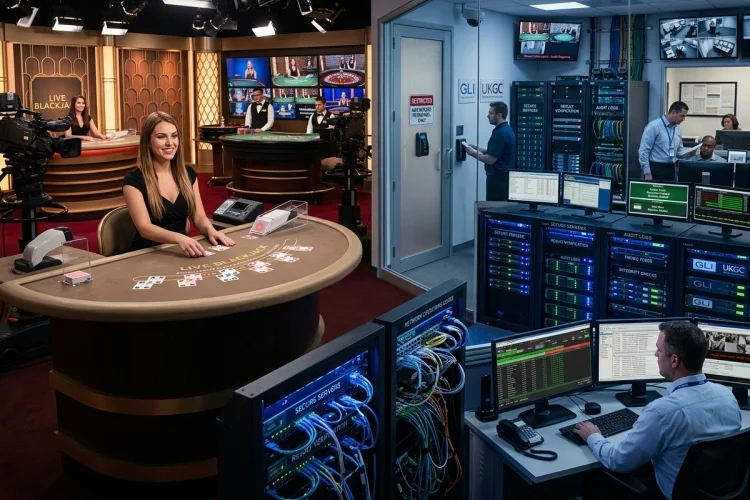
A professional live casino broadcast is designed to appear relaxed and entertaining. Behind the presenter, however, the operation follows security procedures closer to those of a regulated casino and financial technology platform than an ordinary entertainment stream.

Every accepted wager involves money, timing, game integrity, and personal account data. The operator must demonstrate which bets were received, when the wagering period ended, what physical outcome occurred, and how each balance was settled.

A video feed without reliable transaction records would not be sufficient. Understanding how live casino streaming works safely behind the scenes means looking beyond cameras and studio décor.

Important controls include restricted access, dealer training, surveillance, secure servers, result verification, audit logs, and formal procedures for interrupted or invalid rounds.

The UK Gambling Commission requires licensed live dealer operations under its authority to be fair and independently auditable.

GLI standards similarly describe continuous recording, secure equipment, equivalent player feeds, and systems that prevent early access to outcomes.

Studios Use Controlled Access

Live casino equipment is placed in a restricted environment rather than an ordinary public filming location. Access may be separated between presenters, floor supervisors, surveillance teams, technicians, and authorized management.

This reduces opportunities for interference with cards, wheels, shoes, servers, or communications equipment. Entry rules can also help investigators determine who was present when an incident occurred.

GLI-19 states that live game equipment, gaming servers, control servers, and communication systems should be installed in secure locations protected against unauthorized access, environmental hazards, and power failure.

Dealers Follow Documented Procedures

Game presenters do more than appear on camera. They must handle equipment according to defined rules and communicate each stage clearly.

Procedures cover opening bets, closing the wagering period, dealing cards, announcing results, and responding to mistakes. Supervisors may be required to approve corrections or voids.

The UK Gambling Commission’s guidance for live studios refers to trained croupiers, commercial-quality equipment, supervision, surveillance, and game logs. These measures make the operation independently reviewable rather than dependent on the dealer’s word alone.

Wagers Must Close Before the Outcome Is Known

One of the most important controls is preventing late betting. The platform must finalize wagers before anyone can access the result.

In roulette, bets close before the ball settles into a pocket. In card games, the system prevents new wagers after protected information becomes available.

GLI standards specifically require live systems to prevent access to the gaming outcome before the wager has been finalized. They also require the result to be recorded before it is posted to the platform.

This separation protects both the player and the operator from result-based transaction manipulation.

Surveillance Records the Entire Round

The video presented to players is not necessarily the only recording. A studio can maintain separate surveillance coverage designed for security and dispute review.

GLI-19 calls for continuous, unobstructed recordings that identify the sequence, date, and time of each game. The footage should be detailed enough to confirm whether procedures were followed and should be protected against interference or deletion.

If a player disputes a roulette result or dealer action, investigators can compare the surveillance video, game log, and account transaction.

Systems Keep Detailed Game Logs

Each round produces more than a visual result. The system can record the table, time, accepted wagers, result, settlement, manual interventions, and any error condition.

These logs help detect irregular patterns involving equipment, staff, particular locations, or unusual result frequencies. They also support accounting and customer-service investigations.

GLI standards require live gaming activity and results to be recorded through simulcast control servers. UK requirements additionally state that operations must be independently auditable.

Independent Testing Supports Compliance

A provider’s own quality checks are important, but regulated markets may also require external testing or auditing.

The UK Gambling Commission’s testing strategy explains that live dealer requirements apply to relevant licensed studios. An audit conducted for another jurisdiction may be accepted when it sufficiently covers the required provisions; otherwise, an additional audit may be necessary.

Independent review can examine studio controls, game procedures, technical records, and whether the operation meets applicable standards.

Security Extends Beyond the Studio

The platform also needs information-security controls for accounts, communications, transaction data, and critical systems. A secure physical table cannot protect users if the account platform is poorly managed.

The UK Gambling Commission bases its remote-gambling security requirements on relevant controls from ISO/IEC 27001:2022. These requirements apply to critical systems intended to prevent customers from being exposed to unnecessary security risks.

Operators may use access controls, monitoring, system backups, incident response procedures, and protected communications as part of this wider framework.

What Happens During a Disconnection?

A frozen video does not automatically cancel a valid wager. The settlement depends on whether the bet was accepted and whether the player could still influence the result.

UK guidance states that when an operator has received the wager and the customer can no longer influence the outcome, the result should normally stand. If an interruption occurs before an outcome is generated in a single-stage game, the deducted stake should generally be returned.

Operators should publish their disconnection rules. Players should also avoid repeatedly refreshing or submitting the same bet while uncertain whether the first instruction was accepted.

Responsible Design Still Matters

A secure and fairly audited stream does not remove gambling risk. Continuous tables can make it easy to move from one round to the next without noticing elapsed time.

UK technical standards require elapsed-time information for relevant casino sessions and allow operators to offer duration reminders.

Players should use these tools alongside deposit limits and session budgets. Technical fairness means the game operates according to its rules; it does not mean the player has a long-term advantage.

Safe live casino streaming depends on several layers of control. Restricted studios protect physical equipment, trained dealers follow defined procedures, servers close wagering before results are available, and surveillance systems preserve evidence of every round.

Transaction logs connect accepted bets with verified outcomes and account settlements. Independent audits and information-security requirements provide additional oversight, while interruption policies determine how valid or incomplete wagers are handled.

Before playing, verify that the operator is licensed, read its game and disconnection rules, and check that your wager appears as accepted. Use session reminders and financial limits, because a secure broadcast still involves real gambling risk.

Live Casino

The Advantages and Limitations of Live Dealer Games for Players

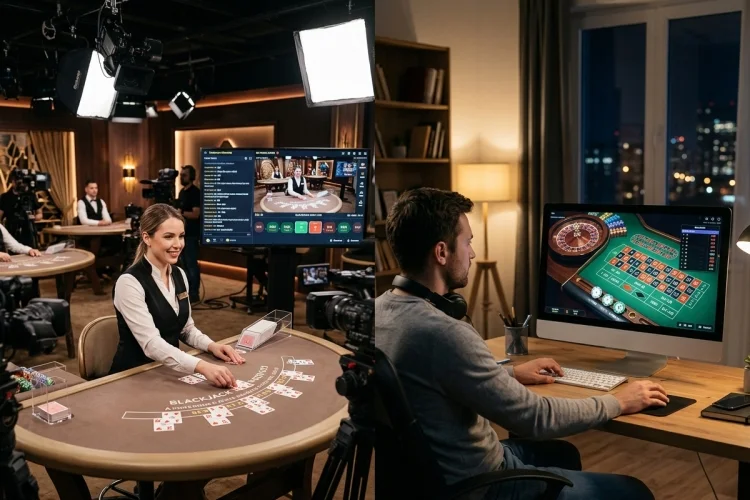
Players choosing an online table game often face two broad formats. Fully digital games generate and display results through software, while live dealer products stream a real presenter conducting the game with physical cards, wheels, or other equipment.

Live play may appeal to users who value visual realism, social interaction, and a pace similar to a physical casino. Digital games may suit those who prefer faster rounds, lower device demands, or the ability to pause between decisions.

Neither option is automatically safer, fairer, or more profitable. The operator’s licence, table rules, payout structure, connection quality, and individual gambling habits matter more than presentation alone.

Understanding the advantages and limitations of live dealer games allows players to compare the formats realistically. The aim is not to find a guaranteed winning table, because none exists.

It is to choose an experience whose pace, rules, technical requirements, and financial boundaries are clear before money is placed at risk.

Live Dealers Provide a Stronger Sense of Presence

A real presenter gives the game a recognizable human rhythm. Players watch the dealer shuffle cards, announce results, and prepare each new round.

Purpose-built studios can use detailed sets, themed uniforms, professional lighting, and several camera angles. Providers also create localized environments with dealers who speak different languages or understand particular markets.

Digital tables may offer polished graphics, but they do not reproduce the same human presentation. Whether that difference improves the experience depends on personal preference.

Live Interaction Can Make Games More Engaging

Chat features allow players to send messages to the presenter and sometimes communicate with other participants. This introduces a limited social element without requiring a visit to a casino venue.

ONE Blackjack combines host communication with multiplayer access, live support, statistics, and betting history.

Social engagement can also make time pass less noticeably. Players should avoid letting conversation or entertainment value override a planned stopping point.

Physical Procedures May Increase Perceived Transparency

Some players prefer seeing real cards and wheels because they can observe the physical result. Multiple camera views may show card values, dealer actions, and roulette outcomes in detail.

However, the appearance of transparency is not enough. A trustworthy live service requires controlled equipment, trained staff, secure areas, supervision, audit trails, and recorded gameplay.

UK standards for licensed studios require fair and independently auditable operations, dealer training, surveillance, and logs. Players should still verify that the casino itself is authorized in their jurisdiction.

Live Games Offer Familiar and Inventive Formats

The category includes conventional blackjack, roulette, baccarat, sic bo, and poker-style games. It also includes game shows that mix physical studio elements with multipliers, animations, or bonus mechanics.

This variety can serve both traditional table-game players and users who prefer entertainment-focused formats. Pragmatic Play’s portfolio combines standard live tables with speed games, multiplayer features, game shows, side bets, and digital statistics.

Additional features can make the rules more complicated. A branded roulette game with multipliers may have a different payout model from standard single-zero roulette, so the paytable must be read carefully.

Live Play Usually Requires More Waiting

Fully digital casino games can produce a result soon after the player presses a button. A live dealer table must follow betting, dealing, decision, settlement, and preparation stages.

Even speed-focused products retain a visible cycle. Speed Roulette averages about 25 seconds per round, while speed blackjack uses simultaneous and automated decisions to reduce waiting.

The slower pace may help users think before betting again. It may also feel inconvenient when dealers change, equipment is checked, or another blackjack participant takes time to decide.

Seats and Betting Limits Can Restrict Access

Some live blackjack tables contain a fixed number of seats. When every position is occupied, users may need to wait, bet behind another hand, or select a different table.

Providers have created scalable alternatives. ONE Blackjack uses a single shared position while allowing many players to make individual decisions. In contrast, certain VIP tables intentionally limit access to a small number of users.

Table minimums and maximums also vary. Dedicated environments may use flexible limits based on the operator, player group, or market. A minimum wager that appears small can still become expensive across repeated rounds.

Streaming Creates Technical Limitations

A live game needs more bandwidth than a simple text or low-animation interface. Video, audio, wagers, account updates, and results must remain synchronized.

Poor connectivity may cause buffering or delayed interaction. GLI guidance recommends equivalent audiovisual feeds, disclosed minimum connection requirements, and procedures for disconnections and interrupted data streams.

Players using mobile data should also consider consumption and signal stability. A long high-definition session may use more data and battery power than a standard digital table.

The Atmosphere Can Encourage Longer Sessions

Live games are designed as entertainment. Dealers, studio décor, chat, statistics, and continuous tables may make it easy to move from one round to the next without reviewing total spending.

Reality checks can display the amount of time elapsed and provide links to account history or exit options. UK standards require licensed remote operators to offer accessible reality-check facilities for relevant games.

Players should also set a monetary limit. WHO identifies financial distress, relationship difficulties, and diversion of household spending among the possible harms associated with gambling.

How to Decide Whether Live Games Suit You

Choose live play when you value interaction, physical presentation, and a slower structured pace. It may also suit players who understand traditional table rules and want to see the procedure unfold.

A digital game may be more practical when the connection is unstable, time is limited, or the available live tables have unsuitable minimum stakes. Neither format should be selected because it appears likely to produce more wins.

Before playing, confirm the licence, game rules, betting range, side-bet payouts, disconnection policy, and session tools. In Great Britain, the Gambling Commission recommends checking the business through its public licensing register.

Live dealer games offer human presentation, social interaction, visible physical procedures, and access to both traditional tables and modern game-show formats. These qualities can create a more immersive online casino experience.

The limitations include slower gameplay, seat restrictions, minimum wagers, short betting windows, device demands, streaming interruptions, and the possibility of losing track of time.

Live presentation does not eliminate the casino advantage or guarantee that an operator is legitimate. Compare the table with digital alternatives, verify the licence, and test your connection before committing money.

Set a firm session length and loss limit, and leave immediately when either boundary is reached.

Live Casino

Live Casino Etiquette Every Player Should Know on Any Device

Live casino etiquette is not limited to speaking politely with a dealer.

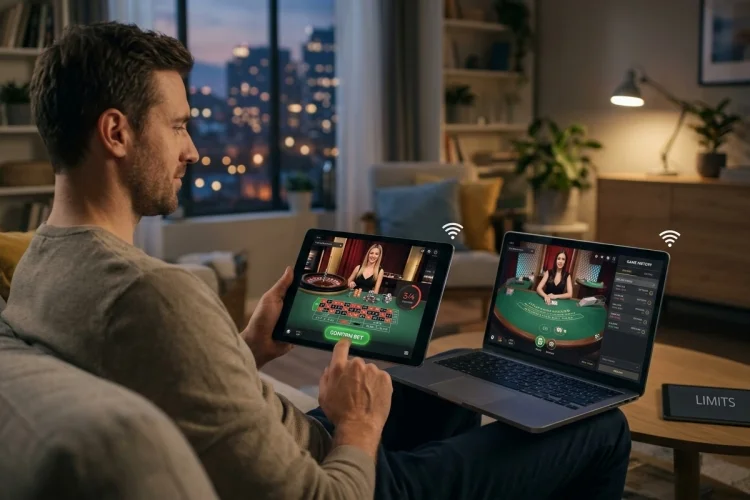
Because the experience depends on streaming technology, digital betting controls, and real-time physical equipment, good behavior also includes preparing your device and responding correctly when something goes wrong.

A player with an unstable connection may miss a betting window or lose the video feed after a wager has been accepted. Another may tap repeatedly, create duplicate actions, or accuse the dealer before checking the game history.

On a small mobile screen, it is also easy to overlook a side bet or misunderstand the total amount placed. Learning live casino etiquette every player should know on mobile and desktop can prevent many of these problems.

The key principles are patience, accuracy, privacy, and personal control. Confirm each wager before the timer ends, avoid disrupting chat with unresolved complaints, and use official records when investigating a disputed result.

Technical preparation does not remove financial risk. Players should still use only licensed services, understand the game rules, and create strict time and spending limits before entering a live room.

Test Your Connection Before Joining

Live games require both a video stream and a responsive betting interface. A weak connection may create delayed video, frozen images, missing audio, or slow confirmation of wagers.

Close unnecessary applications and use a secure network. Avoid playing through public Wi-Fi where possible, especially when accessing an account containing payment and identity information.

Watch several rounds without betting to determine whether the stream and controls are stable. If the video repeatedly freezes, leave the table rather than risking unclear transactions.

Make Sure the Interface Fits Your Screen

On mobile devices, important controls may be placed behind menus or compressed into a smaller area. Locate the balance, total wager, betting timer, game rules, history, and clear-bet button before participating.

Rotate the device only when the platform supports it without interrupting the game. Accidentally closing a window or switching applications during a timed blackjack decision can cause the system to apply a default action.

The amount being wagered should be clearly available before commitment on regulated remote platforms. Check the total figure, especially when several digital chips or side bets appear on the layout.

Avoid Last-Second Betting

Waiting until the final moment may feel exciting, but it increases the likelihood that a wager will miss the server’s deadline. The visual stream can be slightly delayed compared with the system recording accepted bets.

Place the wager early enough to confirm that it appears on the layout and has been deducted correctly. When betting closes, do not continue tapping in an attempt to force the action through.

A rejected bet should be treated as rejected. Wait for the next round instead of arguing with the dealer, who normally has no control over server timing or account transactions.

Check Game History Before Reporting an Error

When a stream freezes, the underlying round may continue. Your accepted bet can still be settled according to the result recorded by the casino system.

After reconnecting, review your balance and game history. Look for the table name, round number, stake, outcome, and settlement amount.

Standards governing interrupted remote gambling require systems to retain information needed to restore, complete, or appropriately void affected games. The exact resolution depends on whether the wager was accepted and whether a valid outcome was produced.

Report Problems Through Official Support

The dealer is responsible for presenting the game, not investigating account records. Posting repeated complaints in live chat may distract from the table without producing a resolution.

Contact official customer support and provide specific details. Useful information includes the approximate time, game name, wager amount, device, error message, and round identifier.

Take a screenshot when possible, but conceal sensitive information before sharing it through any channel. Never post account credentials or payment data in a public chat.

Do Not Assume Every Delay Indicates Cheating

Live games use physical equipment, studio procedures, video systems, and digital settlement software. A delay may result from a card scan, wheel verification, connection problem, or routine review.

Licensed British live dealer studios must be fair and independently auditable. Requirements include trained dealers, supervised activity, secure areas, commercial-quality equipment, and video records covering dealer procedures.

Players are entitled to raise genuine concerns, but accusations should be supported by records rather than based solely on losing results or temporary streaming problems.

Manage Time Across Continuous Tables

Live casino lobbies operate continuously, making it easy to move from one table to another without recognizing that the original session has ended.

Changing from blackjack to roulette does not reset the money or time already spent. Track the complete session across every table.

Great Britain’s remote standards require reality-check facilities intended to help players monitor time. Account displays may also show session information, but an external alarm or written stopping time can provide additional protection.

Exit Responsibly and Securely

Finish any active round before closing the table so that the settlement is easier to verify. Review the account balance and transaction history after the session.

Log out when using a shared device and never save a password on a public computer. Enable multi-factor authentication when the operator provides it.

Do not immediately move to another casino after reaching your limit. GambleAware advises setting a spending limit before gambling because maintaining a decision can become harder during play. Reaching the limit should end the session, not trigger a search for another platform.

Technical awareness is an important part of live casino etiquette. Use a stable, secure connection, learn the interface before betting, and avoid placing wagers during the final seconds of a countdown.

When a stream fails, check the game history rather than repeating the transaction. Send genuine disputes to official customer support with clear records, and never expose sensitive information through chat.

Temporary delays should be investigated calmly instead of treated automatically as evidence of unfair play. Before entering your next live room, test the device, identify the total-wager display, and set an external session timer.

Finish active rounds, review the balance, and log out securely. Once the planned limit is reached, close the casino rather than switching tables or platforms.

Live Casino

What to Expect During Your First Live Casino Session Online

Your first live casino session does not have to begin with a wager. In fact, spending several minutes comparing tables and observing the action is one of the most useful steps a beginner can take.

A live casino lobby may contain standard blackjack, speed baccarat, several roulette wheels, poker-style tables, game shows, and unusual variations with multipliers or side bets.

Each product can have a different minimum stake, betting duration, payout structure, and level of complexity. Choosing the wrong table can make the session feel rushed or cause the total wager to exceed your intended budget.

Understanding what to expect during your first live casino session allows you to prepare before entering. You can choose a suitable game, confirm the table rules, test your connection, and decide how much time and money to spend.

Live casino gambling remains uncertain even when the equipment and dealer are visible. Use a licensed platform, meet the legal-age requirements that apply in your jurisdiction, and never gamble with money required for housing, food, bills, debt, education, or emergencies.

Check the Operator and Studio First

A polished video stream does not prove that a gambling site is properly regulated. Verify the operator through the official public register of the relevant licensing authority.

Regulated live dealer studios may be required to provide fair and independently auditable operations. Controls can cover physical equipment, dealing procedures, installation, monitoring, and studio integrity.

Identify the live casino provider where possible. Reputable providers supply games through licensed operators, but the player’s account, deposits, withdrawals, and complaints remain connected to the casino platform being used.

Select a Game You Already Understand

Live blackjack, roulette, and baccarat are common starting points because their basic objectives are widely documented. More complicated live game shows or modified tables can introduce special multipliers, bonus rounds, or unusual payout rules.

Blackjack requires decisions such as hit, stand, double, and split. Baccarat generally asks you to choose Player, Banker, or Tie, after which drawing rules are applied automatically. Roulette allows wagers on individual numbers and broader groups.

Providers may offer hundreds of live classics and variations, so the rules can differ even within one category.

Choose a standard version until you understand how the interface and betting cycle operate.

Compare Minimum Bets and Table Capacity

Every live table has minimum and maximum limits. A minimum that looks affordable for one round may become expensive across twenty or thirty rounds.

Suppose the minimum is $5 and the table completes thirty rounds during your session. Repeating the minimum wager every round creates $150 in total turnover, even though your account balance may rise and fall along the way.

Blackjack tables may also have limited seats. Some platforms provide unlimited-style tables or let additional users wager behind an active participant. Read the table description so you understand whether you control the hand or are following another seat.

Watch the Betting Cycle Before Participating

Most live rounds follow a predictable sequence: betting opens, the countdown begins, wagers close, the dealer produces the outcome, and the system settles the bets.

Observe at least two complete rounds. Note how long the betting window lasts and where the total wager appears.

Game speed can vary significantly. One live baccarat provider describes standard rounds of about 48 seconds and speed rounds of approximately 27 seconds.

Beginners may benefit from the slower version. More time between results makes it easier to check the stake, understand the outcome, and decide whether to participate in the next round.

Expect Physical Outcomes and Digital Settlement

Live casino games combine two systems. Physical cards, roulette wheels, or dice produce the result, while software records wagers and calculates account settlements.

The dealer announces what happened, and the interface updates winning and losing positions. You do not need to calculate every payment manually, but you should know the advertised payout.

Live dealer games use additional integrity controls because they depend on physical equipment rather than only RNG software. These controls can include equipment standards, operational procedures, and independent audits.

Review your balance and game history if the settlement seems unclear.

Be Careful With Statistics and Previous Results

Live roulette and baccarat tables often display previous outcomes, streaks, percentages, or road maps. These displays summarize history but do not guarantee what will occur next.

A long sequence of Banker results does not require Player to win soon. Similarly, several red roulette outcomes do not make black certain on the next spin.

Previous-result displays can be useful for confirming recent rounds, but they should not be treated as predictive systems. Physical randomness can naturally produce streaks and clusters.

Do not increase your stake because a particular result appears overdue. Larger bets increase the financial consequence without forcing the expected outcome to occur.

Prepare for Mobile and Internet Limitations

Live games require stable video streaming and responsive betting controls. A weak signal can cause delayed footage, missed betting windows, or frozen screens.

Use a secure connection and close unnecessary applications before starting. On a small screen, confirm that the balance, total wager, timer, and main controls remain visible.

Do not continue when the connection repeatedly fails. Interrupted gambling standards require systems to retain information needed to handle affected rounds, but resolving several disputed bets can still be inconvenient.

Record the round details and contact official support when a wager is not clearly settled.

Build a First-Session Budget

Choose a maximum loss and session duration before entering the lobby. Divide the spending limit by the intended number of rounds to find a sensible average wager.

For example, a $30 budget across twenty rounds suggests an average maximum of $1.50 per round. A $5 minimum table would not fit that plan, even when its presentation looks attractive.

Avoid side bets until their cost and payout rules are fully understood. Multiple small wagers can produce a much larger total stake than the main bet alone.

GambleAware recommends deciding on spending limits in advance and using account-level limits or written reminders to make the decision easier to maintain.

A successful first live casino session is not measured by whether you finish with a win. It is measured by whether you understand the table, remain within your budget, and leave according to your original plan.

Verify the operator, choose a familiar game, compare minimum bets, and watch several rounds before participating. Standard-speed tables usually provide beginners with more time to review each decision.

Treat statistics as historical information, prepare for possible connection problems, and check every wager before the betting timer ends.

Create your budget before opening the live lobby and select a table that genuinely fits it. Stop when the spending or time limit is reached. The dealer and studio can make the game feel authentic, but every wager still carries the possibility of financial loss.