
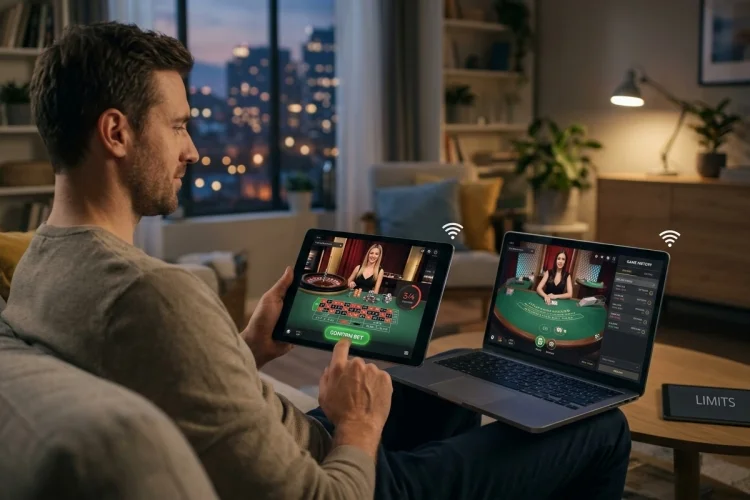
Live Casino Etiquette Every Player Should Know on Any Device
Live casino etiquette is not limited to speaking politely with a dealer.
Because the experience depends on streaming technology, digital betting controls, and real-time physical equipment, good behavior also includes preparing your device and responding correctly when something goes wrong.
A player with an unstable connection may miss a betting window or lose the video feed after a wager has been accepted. Another may tap repeatedly, create duplicate actions, or accuse the dealer before checking the game history.
On a small mobile screen, it is also easy to overlook a side bet or misunderstand the total amount placed. Learning live casino etiquette every player should know on mobile and desktop can prevent many of these problems.
The key principles are patience, accuracy, privacy, and personal control. Confirm each wager before the timer ends, avoid disrupting chat with unresolved complaints, and use official records when investigating a disputed result.
Technical preparation does not remove financial risk. Players should still use only licensed services, understand the game rules, and create strict time and spending limits before entering a live room.
Test Your Connection Before Joining
Live games require both a video stream and a responsive betting interface. A weak connection may create delayed video, frozen images, missing audio, or slow confirmation of wagers.
Close unnecessary applications and use a secure network. Avoid playing through public Wi-Fi where possible, especially when accessing an account containing payment and identity information.
Watch several rounds without betting to determine whether the stream and controls are stable. If the video repeatedly freezes, leave the table rather than risking unclear transactions.
Make Sure the Interface Fits Your Screen
On mobile devices, important controls may be placed behind menus or compressed into a smaller area. Locate the balance, total wager, betting timer, game rules, history, and clear-bet button before participating.
Rotate the device only when the platform supports it without interrupting the game. Accidentally closing a window or switching applications during a timed blackjack decision can cause the system to apply a default action.
The amount being wagered should be clearly available before commitment on regulated remote platforms. Check the total figure, especially when several digital chips or side bets appear on the layout.
Avoid Last-Second Betting
Waiting until the final moment may feel exciting, but it increases the likelihood that a wager will miss the server’s deadline. The visual stream can be slightly delayed compared with the system recording accepted bets.
Place the wager early enough to confirm that it appears on the layout and has been deducted correctly. When betting closes, do not continue tapping in an attempt to force the action through.
A rejected bet should be treated as rejected. Wait for the next round instead of arguing with the dealer, who normally has no control over server timing or account transactions.
Check Game History Before Reporting an Error
When a stream freezes, the underlying round may continue. Your accepted bet can still be settled according to the result recorded by the casino system.
After reconnecting, review your balance and game history. Look for the table name, round number, stake, outcome, and settlement amount.
Standards governing interrupted remote gambling require systems to retain information needed to restore, complete, or appropriately void affected games. The exact resolution depends on whether the wager was accepted and whether a valid outcome was produced.
Report Problems Through Official Support
The dealer is responsible for presenting the game, not investigating account records. Posting repeated complaints in live chat may distract from the table without producing a resolution.
Contact official customer support and provide specific details. Useful information includes the approximate time, game name, wager amount, device, error message, and round identifier.
Take a screenshot when possible, but conceal sensitive information before sharing it through any channel. Never post account credentials or payment data in a public chat.
Do Not Assume Every Delay Indicates Cheating
Live games use physical equipment, studio procedures, video systems, and digital settlement software. A delay may result from a card scan, wheel verification, connection problem, or routine review.
Licensed British live dealer studios must be fair and independently auditable. Requirements include trained dealers, supervised activity, secure areas, commercial-quality equipment, and video records covering dealer procedures.
Players are entitled to raise genuine concerns, but accusations should be supported by records rather than based solely on losing results or temporary streaming problems.
Manage Time Across Continuous Tables
Live casino lobbies operate continuously, making it easy to move from one table to another without recognizing that the original session has ended.
Changing from blackjack to roulette does not reset the money or time already spent. Track the complete session across every table.
Great Britain’s remote standards require reality-check facilities intended to help players monitor time. Account displays may also show session information, but an external alarm or written stopping time can provide additional protection.
Exit Responsibly and Securely
Finish any active round before closing the table so that the settlement is easier to verify. Review the account balance and transaction history after the session.
Log out when using a shared device and never save a password on a public computer. Enable multi-factor authentication when the operator provides it.
Do not immediately move to another casino after reaching your limit. GambleAware advises setting a spending limit before gambling because maintaining a decision can become harder during play. Reaching the limit should end the session, not trigger a search for another platform.
Technical awareness is an important part of live casino etiquette. Use a stable, secure connection, learn the interface before betting, and avoid placing wagers during the final seconds of a countdown.
When a stream fails, check the game history rather than repeating the transaction. Send genuine disputes to official customer support with clear records, and never expose sensitive information through chat.
Temporary delays should be investigated calmly instead of treated automatically as evidence of unfair play. Before entering your next live room, test the device, identify the total-wager display, and set an external session timer.
Finish active rounds, review the balance, and log out securely. Once the planned limit is reached, close the casino rather than switching tables or platforms.