How Casino Games Have Evolved From Mechanical Reels to Mobile Play
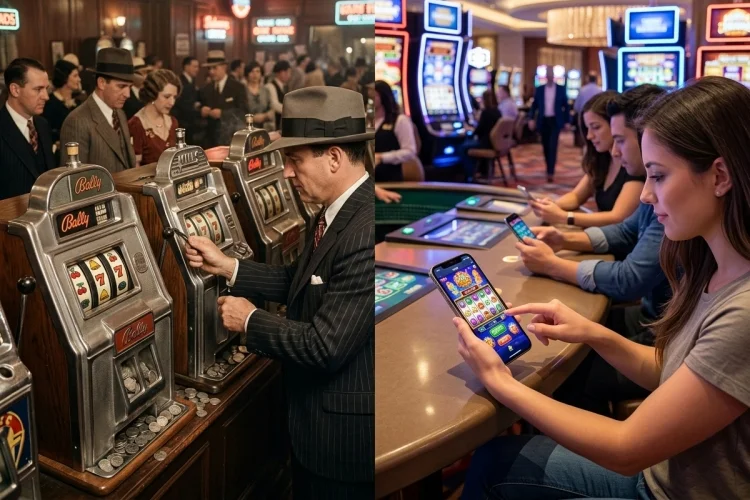
A casino floor from the 1930s would look very different from an online casino running on a smartphone today. Mechanical machines once relied on physical reels and coins, while table games required everyone to be standing or sitting in the same room.
Understanding How Casino Games Have Evolved reveals something interesting: the technology has changed much more than the basic ideas.
Cards are still compared, roulette wheels still determine numbers, and slots still produce symbol combinations. What changed is how those experiences are created, delivered, and expanded with new features.
Early Casino Games Were Mostly Physical
For much of casino history, games depended entirely on physical equipment.
Blackjack needed cards, chips, a dealer, and a table. Roulette required a real wheel and ball. Craps depended on physical dice, while early slot machines were built from metal components, reels, springs, and coin mechanisms.
The Smithsonian’s collection includes a Mills Novelty Company Castle Front machine dating from the 1930s. Mills was a pioneer in coin-operated mechnical devices, showing how slot entertainment existed long before digital screens became standard.
These machines were limited by their physical construction.
If a manufacturer wanted to introduce another symbol, payout, or reel configuration, the hardware itself might need modification. Modern software can make similar changes without rebuilding an entire cabinet.
Slot Machines Made the Leap to Electronics
Slots experienced one of the biggest transformations in casino history.
Mechanical reels gradually gave way to electronic and video systems. Once screens replaced purely mechanical displays, developers gained far more freedom over layouts, symbols, animations, sounds, and bonus sequences.
The basic slot concept survived: a wager starts a game cycle and the resulting symbol arrangement determines the outcome.
Everything around that idea expanded.
Modern games can include cascading symbols, expanding wilds, sticky wilds, multipliers, free spins, progressive jackpots, changing reel grids, and multi-stage bonuses.
Features that would have been extremely difficult—or impossible—to create with purely physical machinery became possible through software.
This is a good example of how casino developement often works. Technology does not necessarily replace the original concept. It gives developers more ways to build around it.
The Internet Moved Casino Games Beyond the Building
The growth of the commercial internet changed where casino-style games could exist.
The Computer History Museum notes that gambling websites were among the early commercial businesses operating on the Web by the mid-1990s. It also documents Interlotto, launched in 1995, as an early internet gambling operation offering online transactions and scratchcard games.
That transition changed the basic relationship between players and casino games.
Instead of traveling to a physical property, users could access digital versions through a computer. Blackjack tables became graphical interfaces. Roulette wheels became software animations. Slots no longer required a dedicated machine sitting on a casino floor.
Today, remote casino licensing in Great Britain explicitly covers casino games delivered through websites, mobile phones, and other online services, including blackjack, roulette, poker, and online slots.
The casino had effectively become software.
RNG Technology Changed Digital Game Design
Once games moved onto computers, developers needed reliable ways to determine outcomes without a physical wheel, deck, or pair of dice.
Random Number Generator technology became central to many digital casino products.
An RNG can determine results electronically according to the game’s programmed mathematical structure. Instead of watching a mechanical reel physically stop, software can select the result and then display it through animation.
Regulated markets therefore developed technical standards covering remote gambling software. The UK Gambling Commission currently maintains Remote Gambling and Software Technical Standards governing aspects of licensed online gaming systems in Great Britain.
This transition also allowed developers to create games that no longer needed to imitate physical machines perfectly.
Digital slots could expand their grids. Virtual table games could run much faster. Bonus rounds could move into completely new environments.
The screen became part casino table and part interactive entertainment system.
Live Dealers Brought Human Interaction Back Online
Digital casino games solved the location problem, but something was missing: a real person on the other side of the table.
Live casino technology tried to restore that human element.
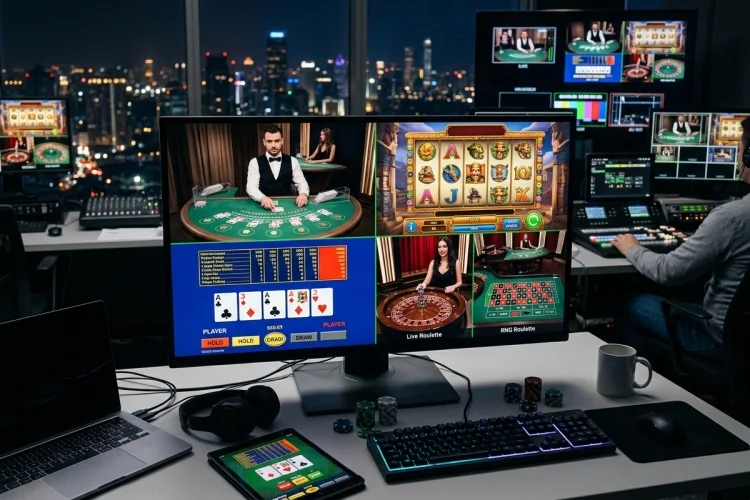
Evolution began operating from a small Riga studio in 2006, initially streaming games such as roulette, blackjack, and baccarat over the internet. Early setups were relatively simple, using basic cameras and limited video technology compared with today’s studios.
By its tenth anniversary in 2016, Evolution reported operating more than 150 live tables and serving more than 70 licensees.
Instead of having software visually simulate every card, players could watch a real presenter deal them through a live video stream.
This created a hybrid format: physical cards and wheels combined with digital betting interfaces.
Mobile Devices Changed Where Games Could Be Played
Desktop computers were only one stage of the transition.
As tablets and smartphones became more capable, casino interfaces started moving onto smaller screens. Evolution introduced iPad versions of live games in 2012, initially including mobile roulette and later expanding blackjack and baccarat access.
Mobile technology forced designers to rethink the entire experiance.
Large desktop layouts had to work on narrow screens. Buttons needed to be easy to tap. Betting information had to remain readable without covering the live video or main game.
Slots also shifted toward portrait-friendly and responsive interfaces.
The result is that many games once tied to large cabinets, tables, or desktop monitors can now operate on a device small enough to fit in a pocket.
Classic Games Began Adding Modern Mechanics
Once casinos became software-driven, traditional games could be modified in ways physical formats rarely allowed.
Roulette might include randomly generated multipliers. Blackjack can appear in unlimited-seat versions. Baccarat can add side bets, speed formats, or special payout systems.
The transformation became especially visible with live game shows.
Evolution launched Dream Catcher in 2017 as a large live money-wheel product, describing it at the time as the beginning of a new live game category.
Later products went further. Crazy Time, launched in 2020, combined a physical money wheel with RNG multipliers, augmented reality, interactive bonuses, and elements inspired by slots and video games.
Casino products were no longer simply digital copies of physical games.
They were beginning to become hybrids.
The Core Games Are Still Surprisingly Familiar
Despite all this technology, many underlying concepts remain unchanged.
Blackjack still asks whether a hand can beat the dealer without exceeding 21. Roulette still revolves around where a ball finishes. Baccarat still compares Banker and Player hands.
Even slots retain the idea of placing a wager and receiving a symbol-based outcome.
What has changed most is everything surrounding those basic mechanics: presentation, availability, speed, bonus systems, interfaces, and interaction.
That continuity is probably one reason traditional casino concepts adapt so easily to new platforms. Players can recognise the foundation even when the visual environment looks completly different.
Learning How Casino Games Have Evolved shows a clear journey from physical tables and mechanical machines to software, RNG systems, live streaming, and mobile interfaces.
Yet many classic mechanics have survived almost unchanged.
The next time you see a modern slot or live casino game, look beneath the graphics and bonuses. You will often find an older gaming idea underneath, redesigned for a new generation of technology.